
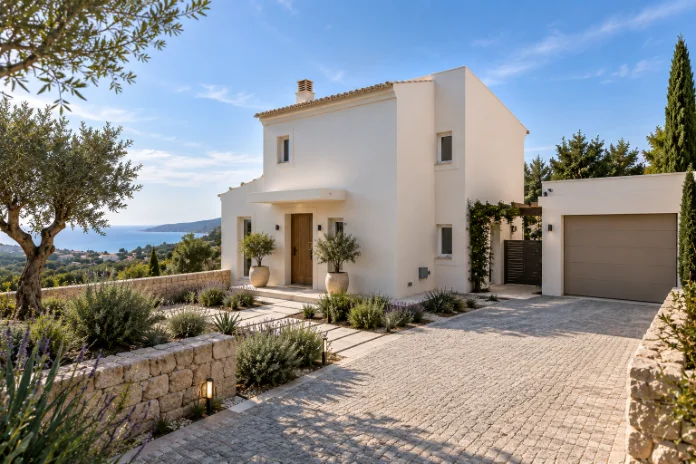
Sold
Portugal
Villa
Sold for 730 000 €
The Atlantic, three hundred days of sunshine a year and a country long used to newcomers. By far the most common destination for our clients.
Portugal is the country we have taken the most clients to, and the one we know best. From the Algarve, where you can genuinely live all year round, to Lisbon and its coast, where a property also tends to be a sound investment.
You will not find listings here. What is visible online is a fraction of what is actually available on the ground, and the vast majority of our clients ended up buying something that was never in the original search. Tell us what you are looking for and we will find it.
The most sought-after part of Portugal and one of the few places that stays genuinely lively in winter. Around Lagos, Portimão and Albufeira you get year-round living with services that stay open, Tavira and the eastern Algarve a calmer atmosphere, and Vilamoura golf resorts and a marina.
Cascais, Estoril and Sintra are ideal for families with children, thanks to the concentration of international schools. Lisbon itself offers apartments with strong rental demand. The highest prices in the country, but also the best connections from anywhere in Europe.
A wild coastline, surfers and villages where new development is not waved through. If you are after space and solitude, this is where to look — and it is kinder on the budget.
Porto, Aveiro and the coast between Nazaré and Figueira da Foz. Greener and cooler than the south, often at friendlier prices. Porto has a strong year-round rental market, while the coast sees pronounced seasonal demand thanks to its beaches, surfing and tourism.
You need a Portuguese NIF tax number to buy a property, and usually to open a bank account and sign energy contracts as well. We will help you arrange the NIF, and in ordinary cases it is ready within a short time.
Once you have chosen, a reservation deposit is paid and the promissory contract (contrato de promessa de compra e venda) is drawn up. On signing it, a deposit of around 10 % of the purchase price is often paid, though the exact amount is a matter of agreement.
A lawyer checks the owner, charges and any other encumbrances in the property register (certidão permanente predial), the details in the tax record (caderneta predial), the building and habitation paperwork, and any arrears. They also compare the property as it stands against the approved plans, so that it becomes clear whether extensions and other alterations are properly permitted.
The deed (escritura) is signed before a notary, who checks identities and paperwork and completes the transfer. Transfer tax and stamp duty are paid beforehand — without the receipts the notary will not proceed.
After signing comes the registration of the new owner in the property register, the transfer of electricity and water, and the handover of the keys. From then on you pay mainly the annual IMI tax, any condominium fees and, depending on the value of your holding, the AIMI surcharge as well.
Treat these figures as a guide. Rates and rules change, so for every transaction we verify the current level of costs before we put the figure in front of you — always with a local lawyer and always before you sign anything binding.
“Thank you to Luděk and Tereza for a stress-free property purchase in Portugal. They took care of us the whole time as if it were their own.”
Yes. Without a Portuguese NIF you cannot buy a property or open a bank account. It is arranged through a tax representative, you need a passport and proof of address, and with our help you have it within a short time in ordinary cases. We arrange it for clients as a standard part of the service.
Roughly ten to twelve per cent. The largest item is IMT transfer tax, plus 0.8 % stamp duty, one to two per cent for the notary and registration, and the lawyer’s fee. We can calculate the exact figure once we know the price and the intended use.
Not necessarily. On properties up to roughly €1.15 million the higher rate does not apply if you are already a Portuguese tax resident when you buy, or become one within two years of the purchase. If a move is on your mind, we work the figures through with you and a local lawyer before you reserve anything — the difference in tax can be considerable.
Yes, but short-term letting requires an Alojamento Local licence and new licences are restricted in parts of Lisbon and Porto. Long-term letting is not restricted. If yield matters to you, we check the options before you reserve anything.
Portuguese banks usually lend non-residents sixty to seventy per cent of the purchase price, with the rest from your own funds. They ask for proof of income, tax returns and a NIF. Some of our clients instead finance the purchase against a property at home.
Tell us what you have in mind and we will come back with what is realistic on the ground. The first meeting is always about you, never about listings.
Let’s stay in touch